Calcium Chloride
10% CaCl2 (1 g/10 mL)
Cation electrolyte / membrane stabilizer / inotrope
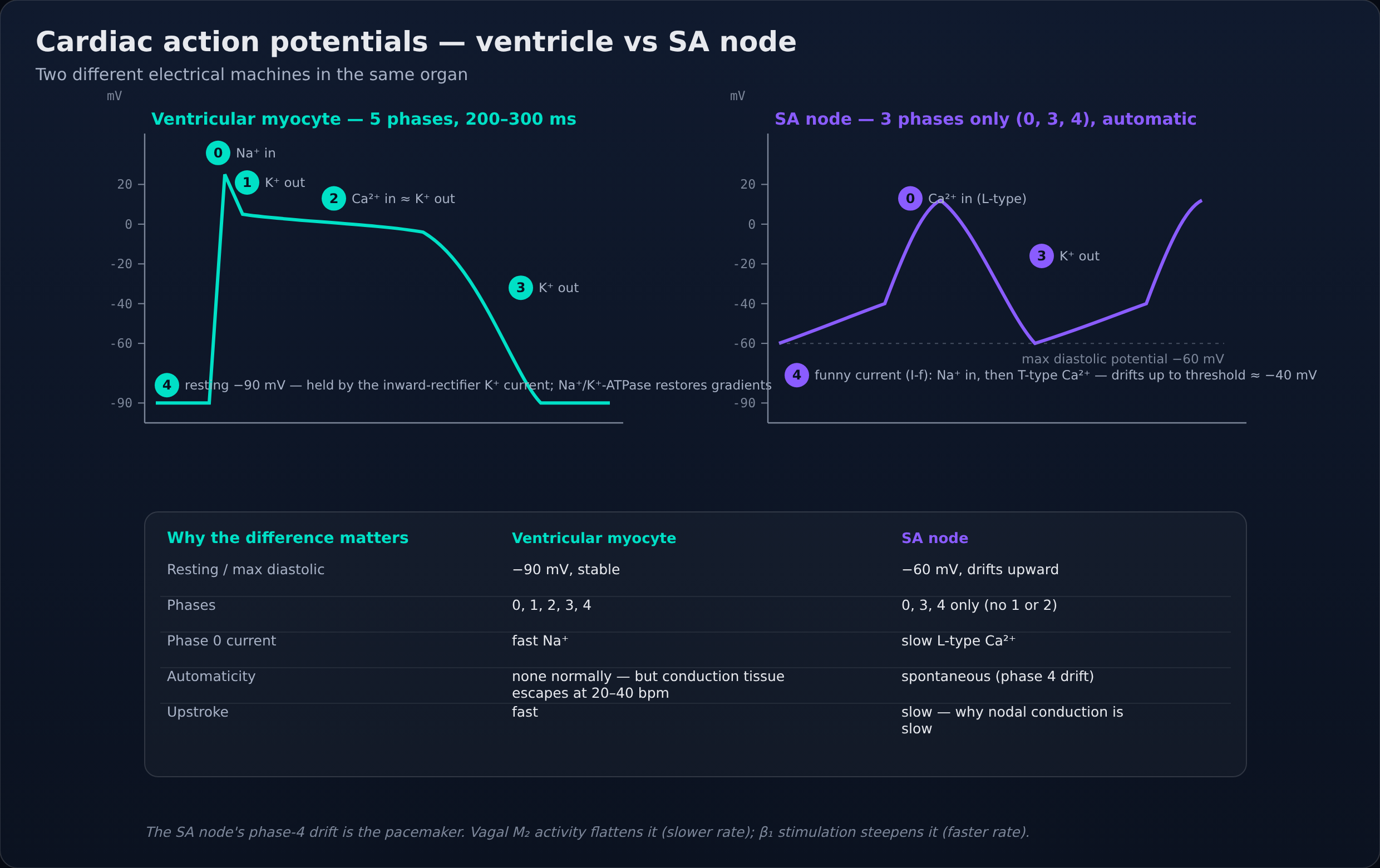
Replaces ionized calcium → restores cardiac contractility, smooth muscle tone, neuromuscular function. Stabilizes cardiac myocyte membrane in hyperK by raising threshold potential.
Indications
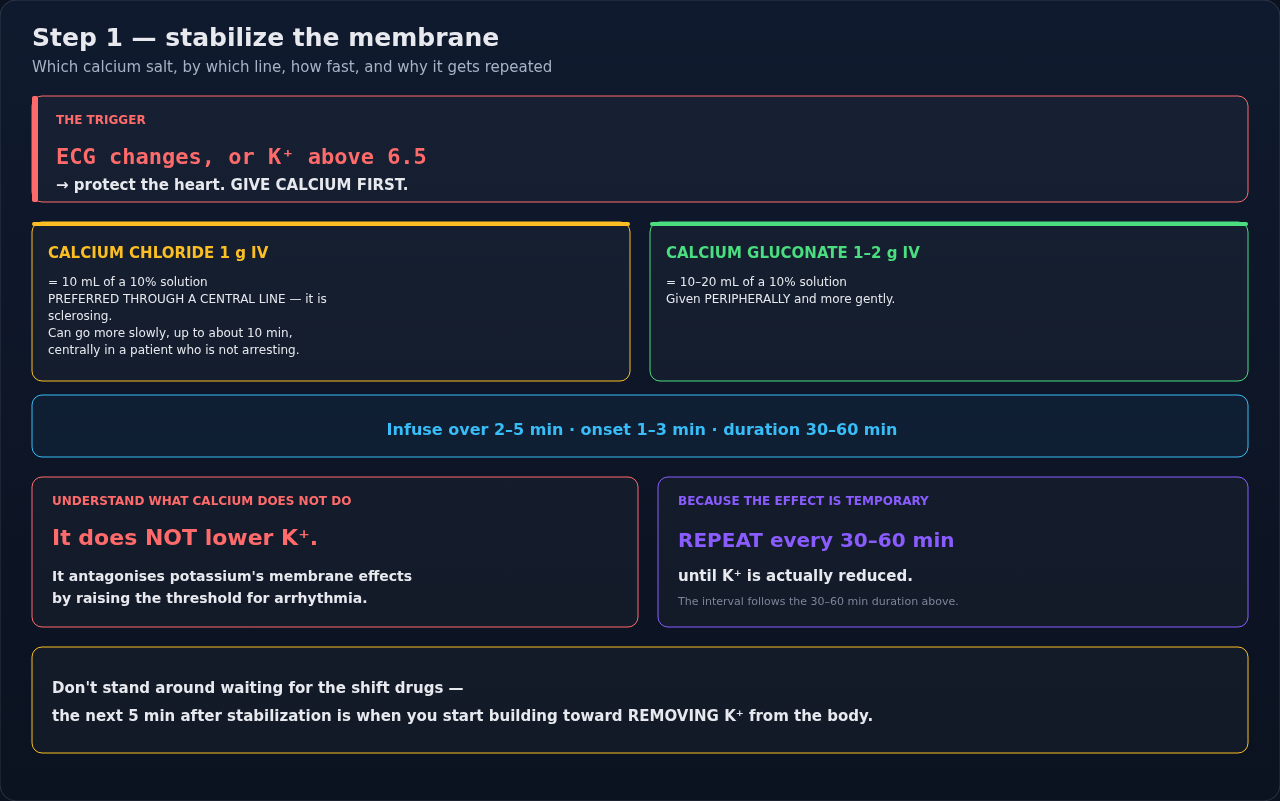
- •Hyperkalemia with ECG changes (membrane stabilization — first-line)
- •Hypocalcemia (symptomatic, post-massive transfusion, post-CPB)
- •Calcium channel blocker overdose
- •Magnesium toxicity
- •Cardiac arrest with documented hypocalcemia
Dosing
| Context | Adult | Pediatric |
|---|---|---|
| Hyperkalemia (ECG changes) | 1 g IV (10 mL of 10%) slow push over 5-10 min via central line; repeat in 5 min if ECG persists | — |
| Hypocalcemia / massive transfusion | 1 g IV per 4 units PRBC; check ionized Ca q15 min during MTP | — |
| CCB overdose | 1-2 g IV bolus + infusion 1-2 g/hr titrated; large doses often required | — |
| Pediatric | — | 20 mg/kg IV (max 1 g per dose) |
Pharmacokinetics
Onset 1-3 min IV; duration 30-120 min depending on indication.
Hemodynamic effects
Rapid push → bradycardia, hypotension, asystole (esp. via peripheral line or with digoxin). Slow push only.
Side effects
- !Tissue necrosis if extravasates (3× more concentrated than calcium gluconate)
- !Bradyarrhythmia + digoxin synergy (caution if patient on digoxin)
- !Hypercalcemia + nephrolithiasis with prolonged use
- !Vasoconstriction at IV site (use central line preferred)
Contraindications
- ×Digoxin toxicity (precipitates lethal arrhythmia)
- ×Hypercalcemia
- ×VFib (relative — except in CPB or known hypoCa cause)
Clinical pearls
- ★CALCIUM CHLORIDE vs CALCIUM GLUCONATE: 1 g CaCl2 = 270 mg elemental Ca; 1 g Ca gluconate = 90 mg elemental Ca. CaCl2 is 3× more concentrated. Use CaCl2 for emergency, Ca gluconate for peripheral or non-emergent.
- ★CITRATE INTOX (massive transfusion, plasmapheresis): citrate chelates ionized Ca → tetany, prolonged QT, arrhythmia. Replace empirically: 1 g CaCl2 per 4 units PRBC.
- ★POST-CPB: ionized Ca often low (citrate from cardioplegia + hemodilution). Routinely replete during separation from bypass.
- ★HYPERK ARREST: calcium does NOT lower potassium — it raises the resting membrane threshold to restore conduction. You still need insulin/dextrose, bicarb, dialysis to actually remove K+.
- ★PERIPHERAL LINE EXTRAVASATION: causes tissue necrosis; central line strongly preferred for CaCl2; Ca gluconate safer peripheral.
Other drugs in Electrolytes
- Calcium Gluconate
Provides elemental calcium (1 g calcium gluconate = ~93 mg / 4.65 mEq elemental Ca²⁺). One-third the elemental calcium of an equivalent dose of CaCl2 (1 g = 273 mg / 13.6 mEq). Used to treat hypocalcemia, antagonize cardiac membrane effects of hyperkalemia, magnesium toxicity, calcium-channel-blocker overdose.
- Potassium Chloride
Provides K⁺ for replacement of intracellular and serum stores. Maintains resting membrane potential. 1 mEq KCl = 39 mg potassium.
- Sodium Bicarbonate
Provides bicarbonate → buffers H⁺ → raises serum + urine pH. Also drives K⁺ intracellularly.
- Sodium Citrate (Bicitra)
Citrate is metabolized to bicarbonate → neutralizes gastric acid. NON-PARTICULATE → if aspirated, far less lung injury than particulate antacids.
Browse all classes: /reference/drugs
Suggested reading
- •Miller's Anesthesia, 9e
- •FDA package insert