Thiopental
Pentothal
Thiobarbiturate IV induction agent
Enhances GABA-A chloride currents (↑ channel-open duration) → rapid loss of consciousness. Classic barbiturate induction agent.
Indications
- •IV induction (largely historical/limited availability in US)
- •Neuroprotection/burst suppression
- •Status epilepticus (refractory)
Dosing
| Context | Adult | Pediatric |
|---|---|---|
| Induction | 3–5 mg/kg IV | 5–6 mg/kg IV |
Pharmacokinetics
Onset ~30 sec (arm–brain). Short duration by REDISTRIBUTION (not metabolism); context-sensitive half-time rises sharply with infusion (zero-order kinetics at high dose).
Hemodynamic effects
↓ BP (venodilation + myocardial depression), compensatory tachycardia. Dose-dependent.
Respiratory effects
Dose-dependent respiratory depression/apnea.
Side effects
- !Hypotension
- !Laryngospasm/bronchospasm (light plane)
- !Tissue necrosis if extravasated; intra-arterial injection → severe vasospasm/gangrene
- !Precipitates porphyria (ALA synthase induction)
Contraindications
- ×Acute intermittent porphyria (ABSOLUTE)
- ×Status asthmaticus (relative)
- ×Hemodynamic instability
Clinical pearls
- ★ACUTE PORPHYRIA is an absolute contraindication (barbiturates induce ALA synthase).
- ★Wake-up after a single dose is by redistribution — repeated dosing/infusion accumulates (long context-sensitive half-time).
- ★Intra-arterial injection is a surgical emergency (crystallization → vasospasm/thrombosis).
Other drugs in Induction Agents
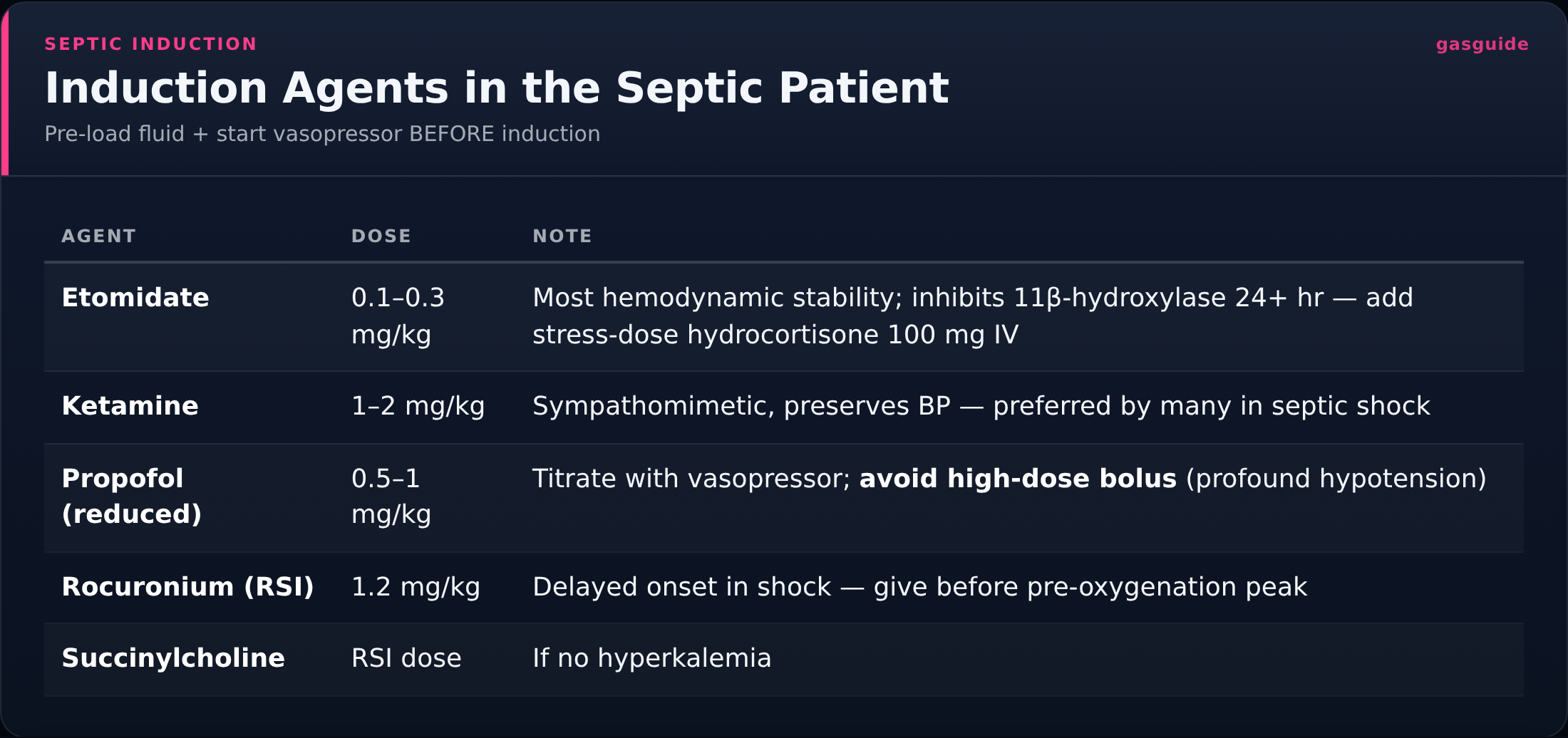
- Propofol
Potentiates GABA-A chloride conductance. Direct CNS depression with no analgesia.
- Etomidate
GABA-A potentiation. Highly hemodynamically stable due to minimal SVR/contractility effects.
- Ketamine
Non-competitive NMDA receptor antagonist. Also effects on opioid, monoaminergic, muscarinic receptors. Produces dissociative anesthesia with analgesia.
- Methohexital
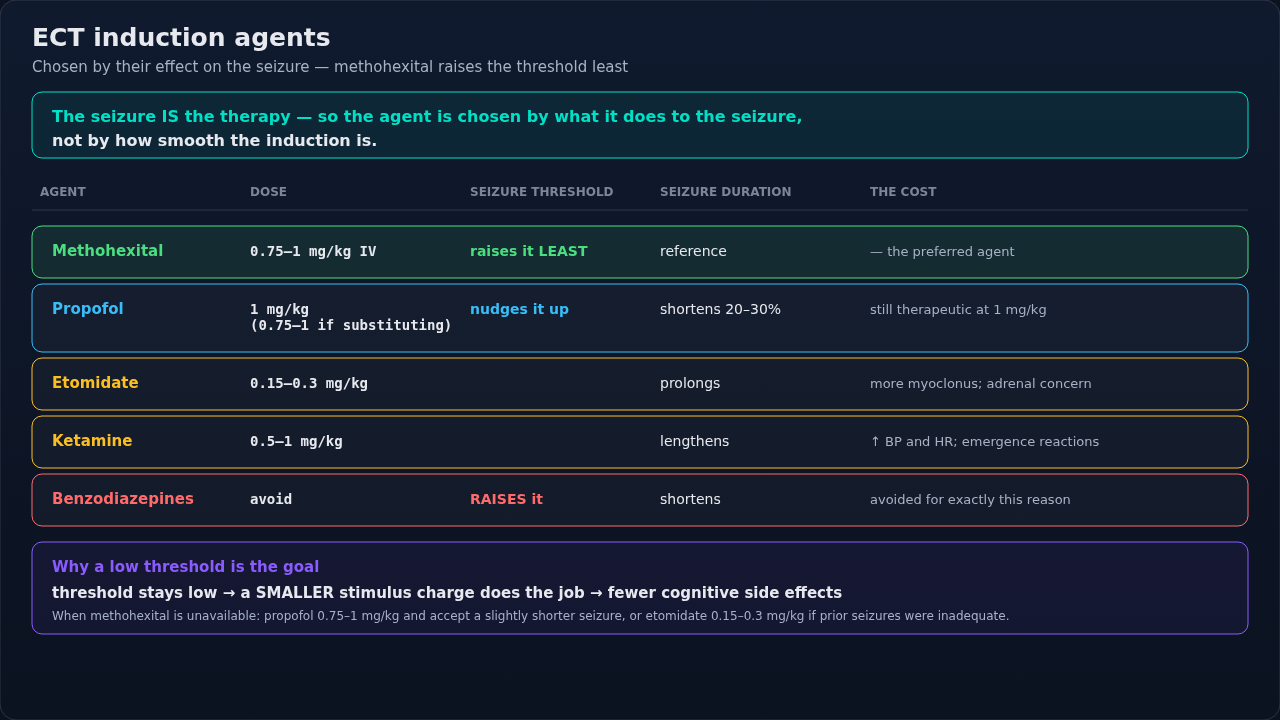
GABA-A potentiation. Shorter-acting than thiopental; lowers seizure threshold (useful for ECT).
- Remimazolam
GABA-A benzodiazepine agonist with an ester linkage → rapid hydrolysis by tissue esterases (like remifentanil among opioids) → fast recovery, organ-independent.
Browse all classes: /reference/drugs
Suggested reading
- •Stoelting & Hines, Pharmacology & Physiology in Anesthetic Practice, 6e
- •Miller's Anesthesia, 9e
- •FDA package insert