IV Acetaminophen
Ofirmev
Para-aminophenol analgesic / antipyretic
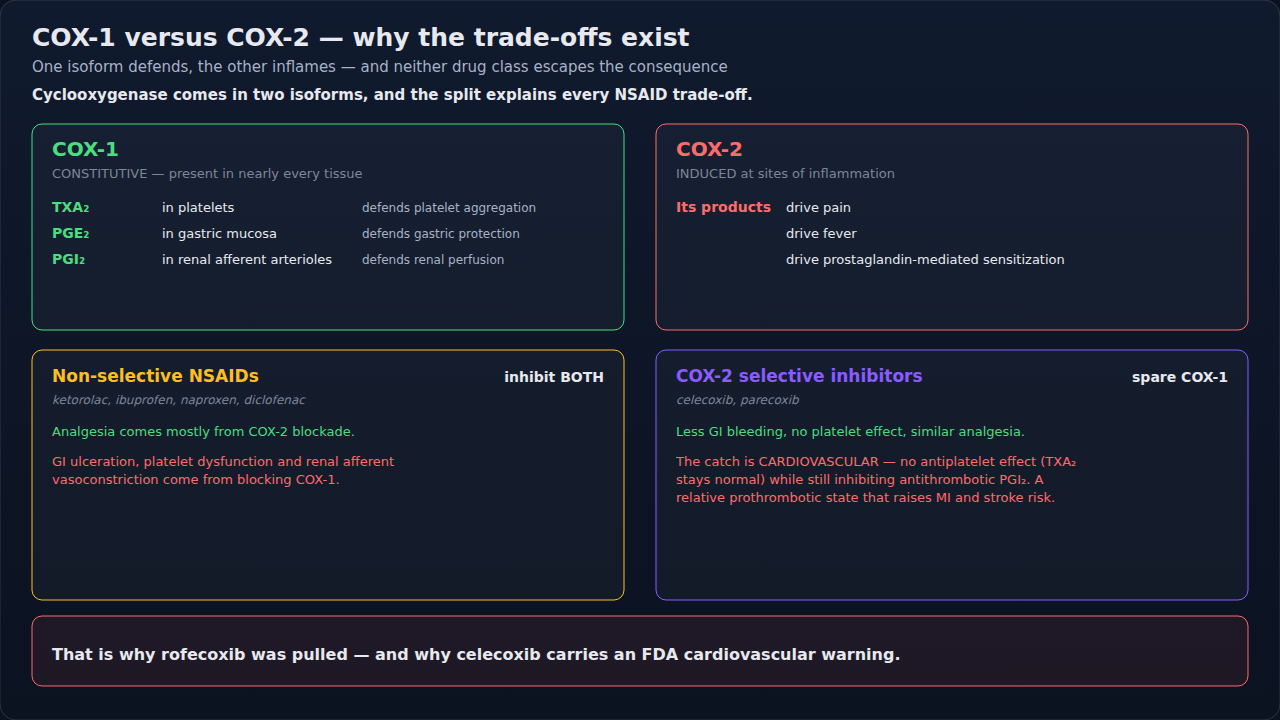
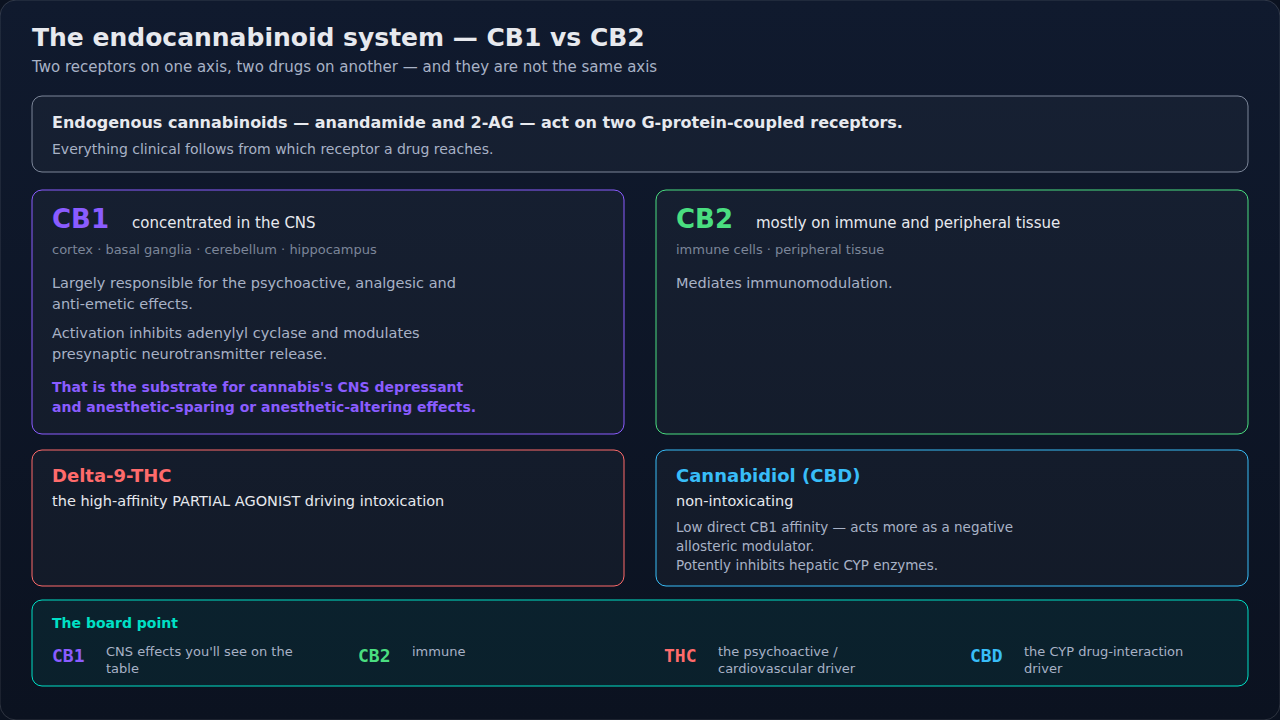
Central COX inhibition + endocannabinoid + descending serotonergic modulation. Minimal peripheral COX → no NSAID-like GI/renal/platelet effects.
Indications
- •Acute mild-to-moderate pain
- •Multimodal analgesia (opioid-sparing component)
- •Antipyretic when NPO or unable to tolerate PO
Dosing
| Context | Adult | Pediatric |
|---|---|---|
| Adult ≥50 kg | 1000 mg IV over 15 min q6h, max 4 g/day | — |
| Adult <50 kg | 15 mg/kg IV q6h, max 75 mg/kg/day or 3.75 g/day | — |
| Pediatric ≥2 yo | — | 15 mg/kg IV q6h, max 75 mg/kg/day or 3.75 g/day |
| Pediatric <2 yo | — | 12.5 mg/kg IV q6h, max 50 mg/kg/day |
Pharmacokinetics
Onset 5-10 min IV; peak 30 min; duration 4-6 hr; hepatic metabolism (glucuronidation + sulfation; minor CYP2E1 → toxic metabolite NAPQI cleared by glutathione).
Side effects
- !Hepatotoxicity at supratherapeutic dose (>4 g/day adult; cumulative)
- !Hypotension (rare — typically with rapid infusion)
- !Hypersensitivity (rare; SJS/TEN very rare)
Contraindications
- ×Severe hepatic impairment (Child-Pugh C)
- ×Active alcohol abuse (depleted glutathione)
- ×Hypersensitivity to acetaminophen
Reversal / antidote
N-acetylcysteine for hepatotoxicity (replenishes glutathione; most effective <8h post-ingestion but worthwhile up to 24h+).
Clinical pearls
- ★PERFECT MULTIMODAL ANCHOR: no bleeding, no renal effect, no platelet effect, no respiratory depression. Opioid-sparing 25-30% in most surgeries.
- ★DOSE STACKING: 4g/day total includes ALL routes (IV + PO + suppository). Combined OTC products (Vicodin, Percocet, Norco) often have 325 mg per pill — review meds list.
- ★HEPATIC DISEASE: Child-Pugh A/B → 2 g/day max; C → avoid. Chronic alcoholics: max 2 g/day.
- ★DON'T USE PROPHYLACTICALLY for hours — peak effect is 30 min after dose; given on schedule q6h around-the-clock for first 24-48 hr post-op.
- ★PRICE: IV form is ~50× more expensive than PO. Convert to oral as soon as patient tolerates.
Other drugs in Narcotics & Analgesics
- Fentanyl
μ-opioid receptor agonist. ~100× potency of morphine.
- Remifentanil
μ-opioid agonist. Ester linkage hydrolyzed by nonspecific tissue + plasma esterases — no organ-dependent clearance.
- Morphine
μ-opioid receptor agonist. Active metabolite morphine-6-glucuronide (M6G) is analgesic and renally cleared — accumulates in renal failure → prolonged sedation/respiratory depression. Causes histamine release.
- Hydromorphone
μ-opioid agonist ~5–7× more potent than morphine. No clinically significant active metabolites → safer than morphine in renal failure. Less histamine release.
- Sufentanil
Most potent opioid in common clinical use — ~1000× morphine, ~10× fentanyl. High lipid solubility.
- Alfentanil
μ-opioid agonist ~1/5–1/10 the potency of fentanyl but FASTEST onset of the family — low pKa means a high non-ionized fraction at physiologic pH.
- Meperidine
μ-opioid agonist ~1/10 morphine, plus κ-agonism (anti-shivering). Active metabolite normeperidine is renally cleared, proconvulsant, and neurotoxic.
Suggested reading
- •Stoelting & Hines, Pharmacology & Physiology in Anesthetic Practice, 6e
- •Miller's Anesthesia, 9e
- •FDA package insert