Tension Pneumothorax
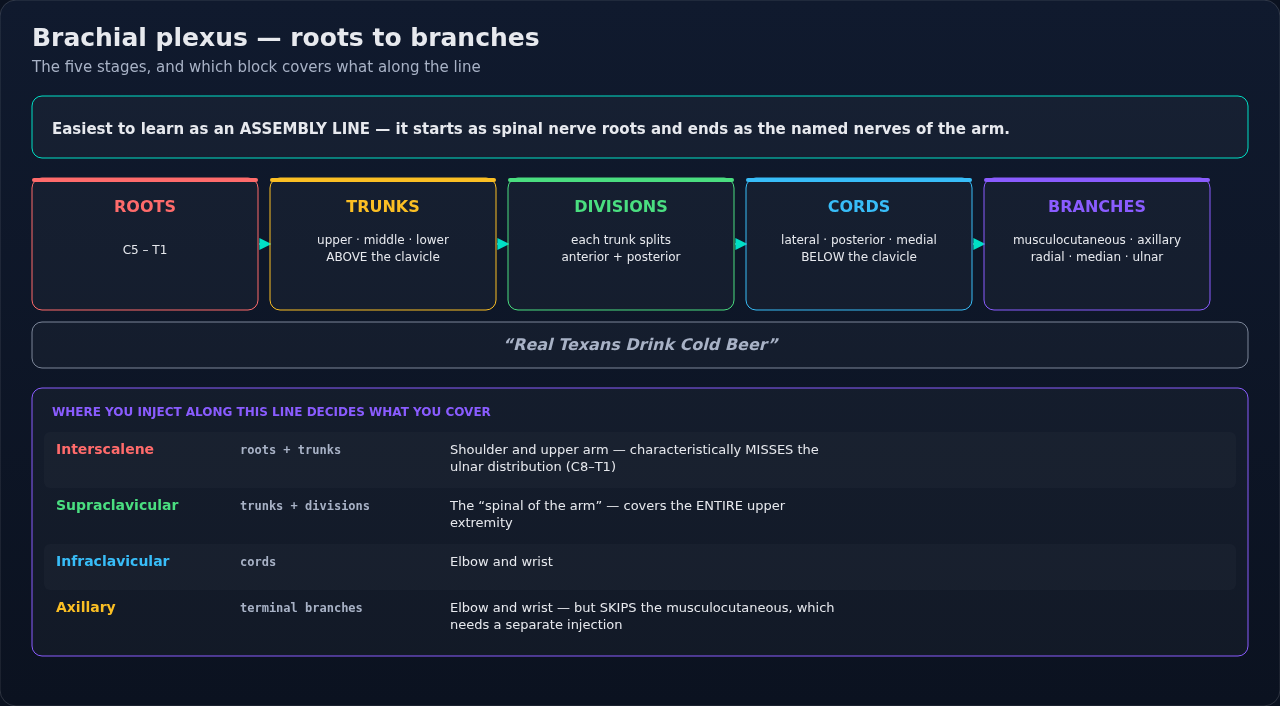
One-way air leak into pleural space → mediastinal shift → ↓venous return → cardiovascular collapse. Suspect with central line attempt, brachial plexus block, trauma, or sudden ↑PIP under PPV.
⚡ Rehearsal mode
Walk the algorithm step by step
6 steps · click-through one at a time. Forces you to pre-read each action before moving on — the way you should rehearse the real thing.
Recognition
- •Hypoxia + hypotension + ↑PIP
- •Tracheal deviation away (late sign)
- •Absent unilateral breath sounds, hyperresonance
- •Distended neck veins, JVD
- •Hemodynamic improvement with disconnection from PPV
Steps
- 1Recognize the trio: hypoxia, hypotension, ↑PIP
- 2Disconnect from PPV + 100% FiO₂Disconnection is both diagnostic and immediate decompression.
- 3Needle decompression — 4th–5th ICS midaxillary or anterior axillary line (adult preferred site per ATLS 10th)Older protocol (2nd ICS midclavicular) is acceptable if 5th ICS access is blocked, but ATLS 10th edition shifted the primary adult site to 4th–5th ICS midaxillary because needle length to pleura is shorter on average and pectoralis bulk is avoided. Pediatric: same 4th–5th ICS midaxillary.
- 4Hemodynamic support — fluid + pressor as needed
- 5Definitive: chest tube 32–36 Fr, 5th ICS midaxillary line
- 6Confirm placement + post-procedure CXR
Drugs + doses
| Drug | Dose | Note |
|---|---|---|
| Phenylephrine | 100–200 mcg IV bolus while preparing decompression | |
| Norepinephrine | 0.05–1 mcg/kg/min infusion |
Pitfalls
- !Don't wait for CXR if suspected; clinical diagnosis.
- !Adult-length needle (3–5 cm) often inadequate for obese chest wall — use longer.
- !Bilateral chest tubes if patient has had bilateral procedures + sudden collapse.
Suggested reading
- ATLS 10th Edition
- WSES Guidelines 2017
Other crisis algorithms
- Malignant Hyperthermia (MH)
Hypermetabolic crisis triggered by volatile anesthetics or succinylcholine in genetically susceptible patients (RYR1, CACNA1S). Treat with dantrolene immediately.
- Perioperative Anaphylaxis
IgE-mediated (or pseudo-allergic) hemodynamic collapse from drug, latex, or transfusion exposure. Most common triggers in OR: NMBAs (rocuronium, succinylcholine), antibiotics, latex.
- Amniotic Fluid Embolism (AFE)
Rare, often fatal obstetric emergency — anaphylactoid syndrome of pregnancy. Sudden hemodynamic collapse, hypoxemia, and DIC during labor, delivery, or postpartum (within 30 min).
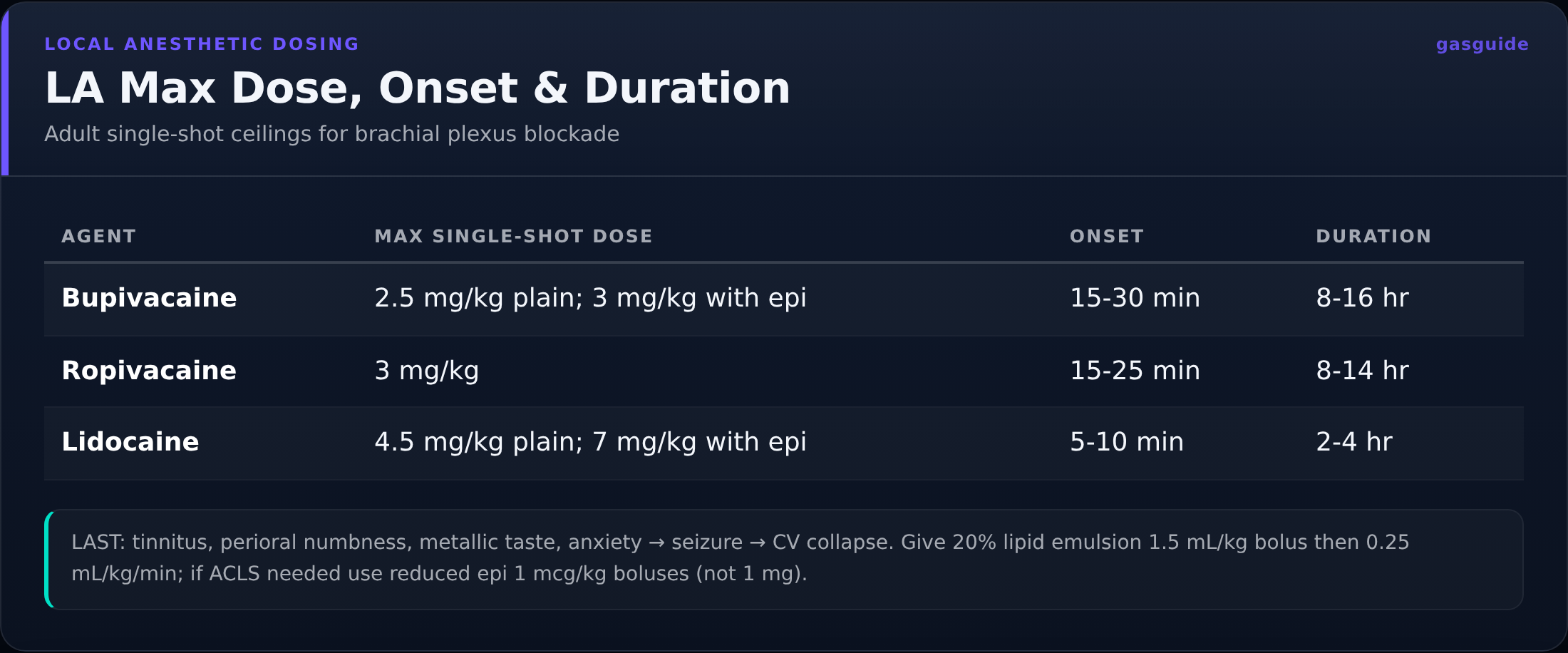
- LAST (Local Anesthetic Systemic Toxicity)
Cardiovascular and CNS toxicity from inadvertent IV injection or systemic absorption of local anesthetic. Bupivacaine highest cardiotoxicity. Ropivacaine + lidocaine slightly safer.
- Laryngospasm
Reflex closure of the vocal cords from light-anesthesia airway stimulation. Common in pediatrics, recent URI, and emergence. Untreated → hypoxia → bradycardia → arrest.
- High / Total Spinal
Cephalad spread of neuraxial local anesthetic causing apnea + cardiovascular collapse. Most common with epidural-to-subarachnoid migration in OB.