LAST (Local Anesthetic Systemic Toxicity)
Cardiovascular and CNS toxicity from inadvertent IV injection or systemic absorption of local anesthetic. Bupivacaine highest cardiotoxicity. Ropivacaine + lidocaine slightly safer.
⚡ Rehearsal mode
Walk the algorithm step by step
8 steps · click-through one at a time. Forces you to pre-read each action before moving on — the way you should rehearse the real thing.
Recognition
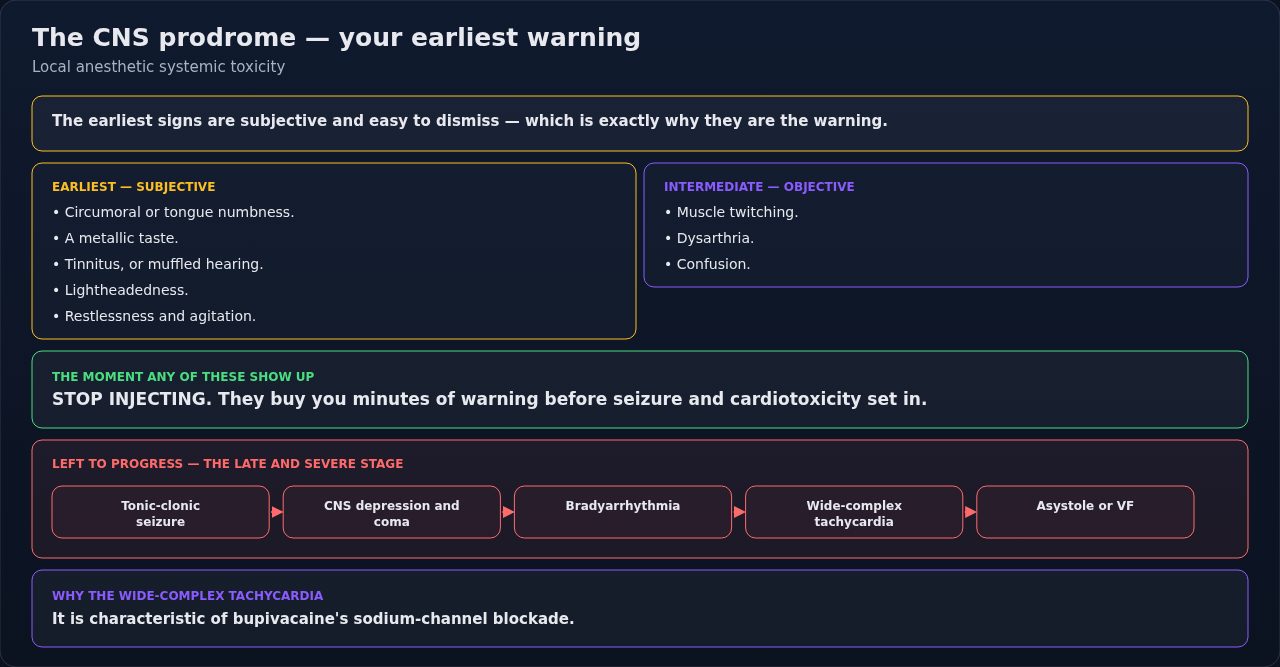
- •Early CNS: tinnitus, perioral numbness, metallic taste, agitation
- •Progressive: seizures, LOC
- •Cardiovascular: arrhythmias (especially ventricular), hypotension, asystole
- •Bupivacaine: may go directly to CV collapse without CNS prodrome
Steps
- 1Stop injection. Call for help + lipid emulsion.
- 2Airway management + 100% O₂Hypoxia + acidosis worsen toxicity dramatically.
- 3Lipid Emulsion 20% — bolus 1.5 mL/kg over 1 minRepeat 1–2× if no response. Then infusion 0.25 mL/kg/min.
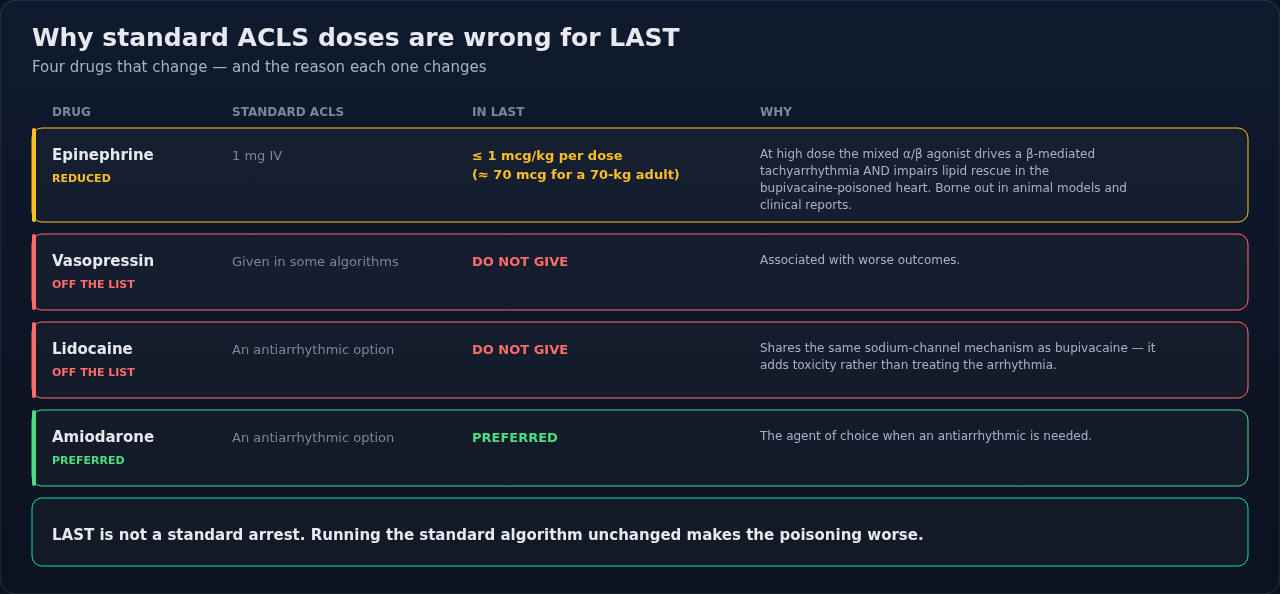
- 4Modified ACLSAvoid vasopressin. Reduce epi to ≤1 mcg/kg (≤100 mcg). No CCBs, β-blockers, or LA antiarrhythmics.
- 5Treat seizuresBenzodiazepine (midazolam 2–5 mg). Avoid propofol (cardiac depression in unstable patient).
- 6Continue lipid 10 min after stabilityMax ~12 mL/kg lipid (relative limit).
- 7Consider ECMO for refractory cardiac arrestBupivacaine washout takes hours.
- 8Report to LipidRescue.org registry
Drugs + doses
| Drug | Dose | Note |
|---|---|---|
| Lipid Emulsion 20% | 1.5 mL/kg bolus, repeat ×1–2; infusion 0.25 mL/kg/min | |
| Epinephrine | ≤1 mcg/kg (≤100 mcg) IV — much smaller than usual ACLS dose | |
| Midazolam | 2–5 mg IV for seizures |
Pitfalls
- !Standard-ACLS-dose epi worsens bupivacaine arrest — go small.
- !Avoid vasopressin, calcium channel blockers, β-blockers, lidocaine, procainamide.
- !Propofol is NOT a substitute for lipid emulsion (10× too dilute).
Suggested reading
- ASRA 2020 Practice Advisory
- Neal Reg Anesth Pain Med 2018
- AAGBI
Other crisis algorithms
- Malignant Hyperthermia (MH)
Hypermetabolic crisis triggered by volatile anesthetics or succinylcholine in genetically susceptible patients (RYR1, CACNA1S). Treat with dantrolene immediately.
- Perioperative Anaphylaxis
IgE-mediated (or pseudo-allergic) hemodynamic collapse from drug, latex, or transfusion exposure. Most common triggers in OR: NMBAs (rocuronium, succinylcholine), antibiotics, latex.
- Amniotic Fluid Embolism (AFE)
Rare, often fatal obstetric emergency — anaphylactoid syndrome of pregnancy. Sudden hemodynamic collapse, hypoxemia, and DIC during labor, delivery, or postpartum (within 30 min).
- Laryngospasm
Reflex closure of the vocal cords from light-anesthesia airway stimulation. Common in pediatrics, recent URI, and emergence. Untreated → hypoxia → bradycardia → arrest.
- High / Total Spinal
Cephalad spread of neuraxial local anesthetic causing apnea + cardiovascular collapse. Most common with epidural-to-subarachnoid migration in OB.
- Intraoperative Pulmonary Embolism
Sudden ↑PA pressure → RV failure → cardiovascular collapse. May be thrombus, fat (long-bone fracture, IM rod), gas (laparoscopy CO₂, sitting craniotomy), or amniotic.