Cannot Ventilate / Cannot Intubate (CVCI)
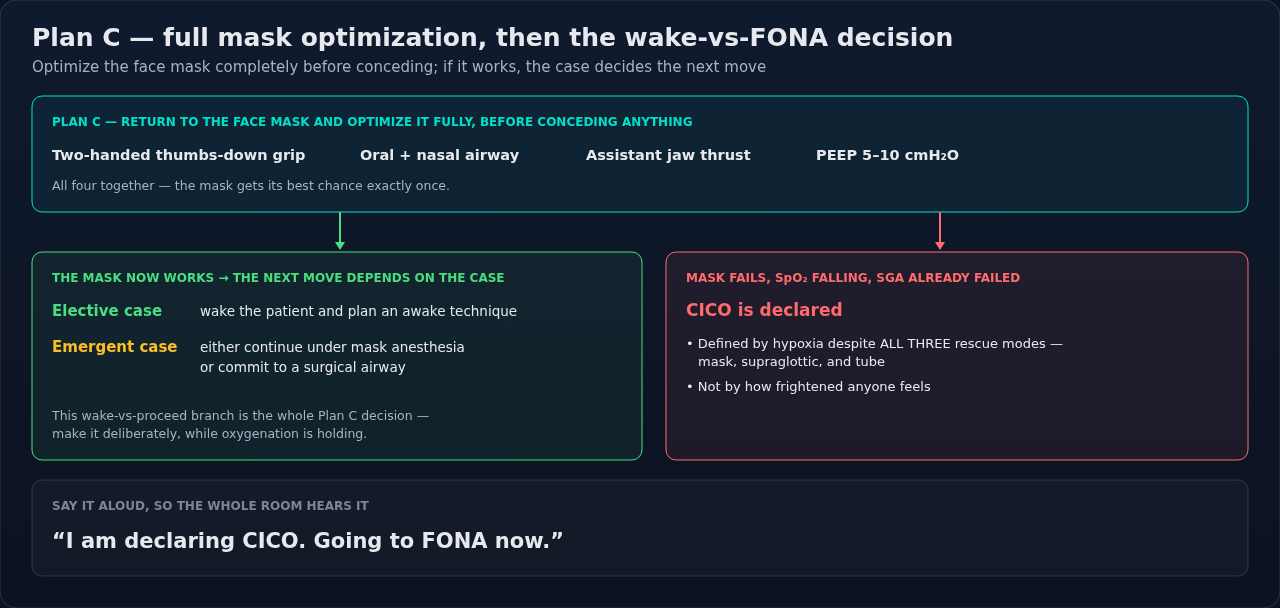
DAS 2015 / ASA 2022 unanticipated difficult airway algorithm. Failed mask + failed SGA + failed intubation → emergency front-of-neck access.
⚡ Rehearsal mode
Walk the algorithm step by step
6 steps · click-through one at a time. Forces you to pre-read each action before moving on — the way you should rehearse the real thing.
Recognition
- •Failed mask ventilation (no chest rise, no ETCO₂)
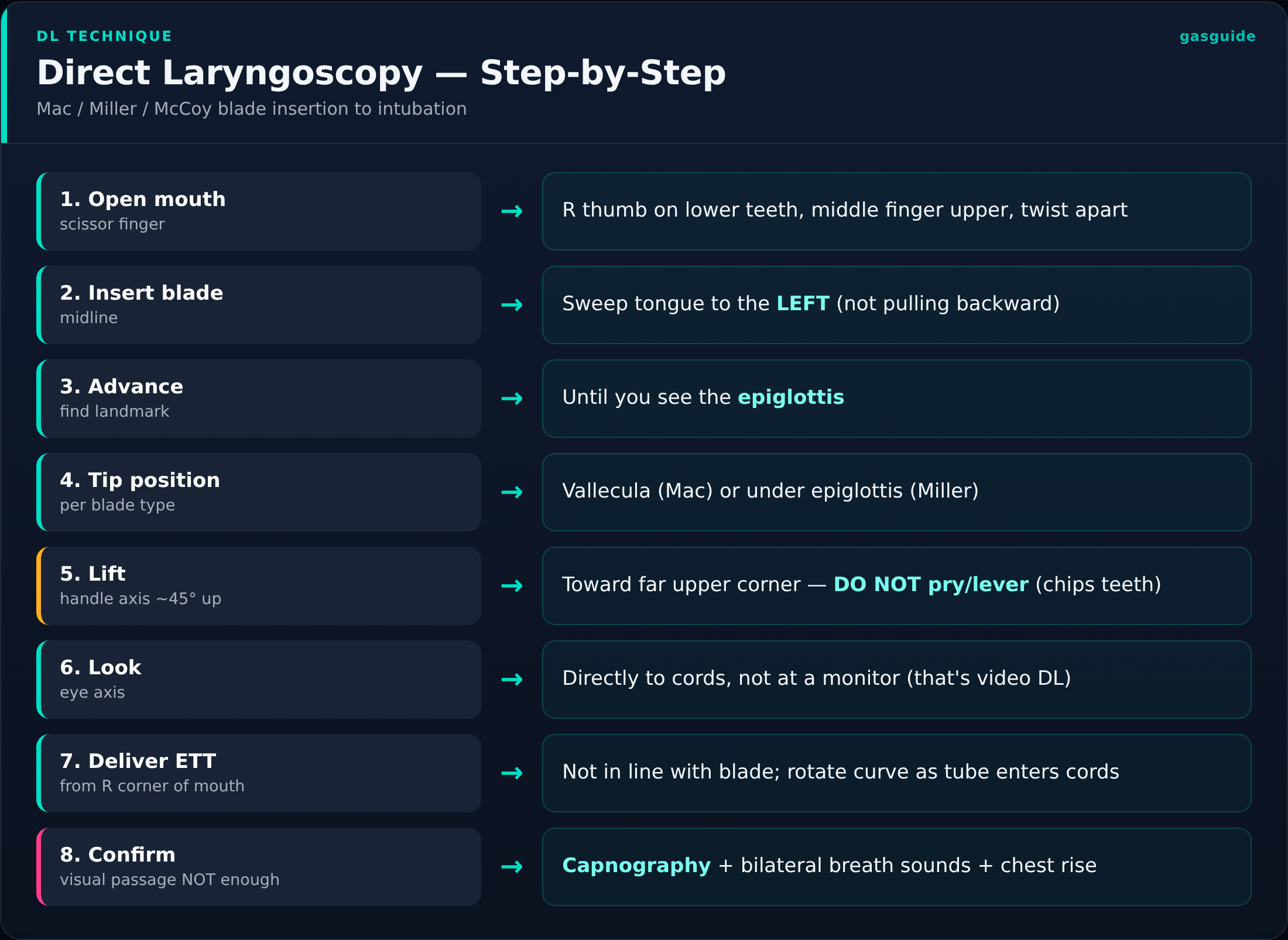
- •Failed laryngoscopy (≤2 best attempts)
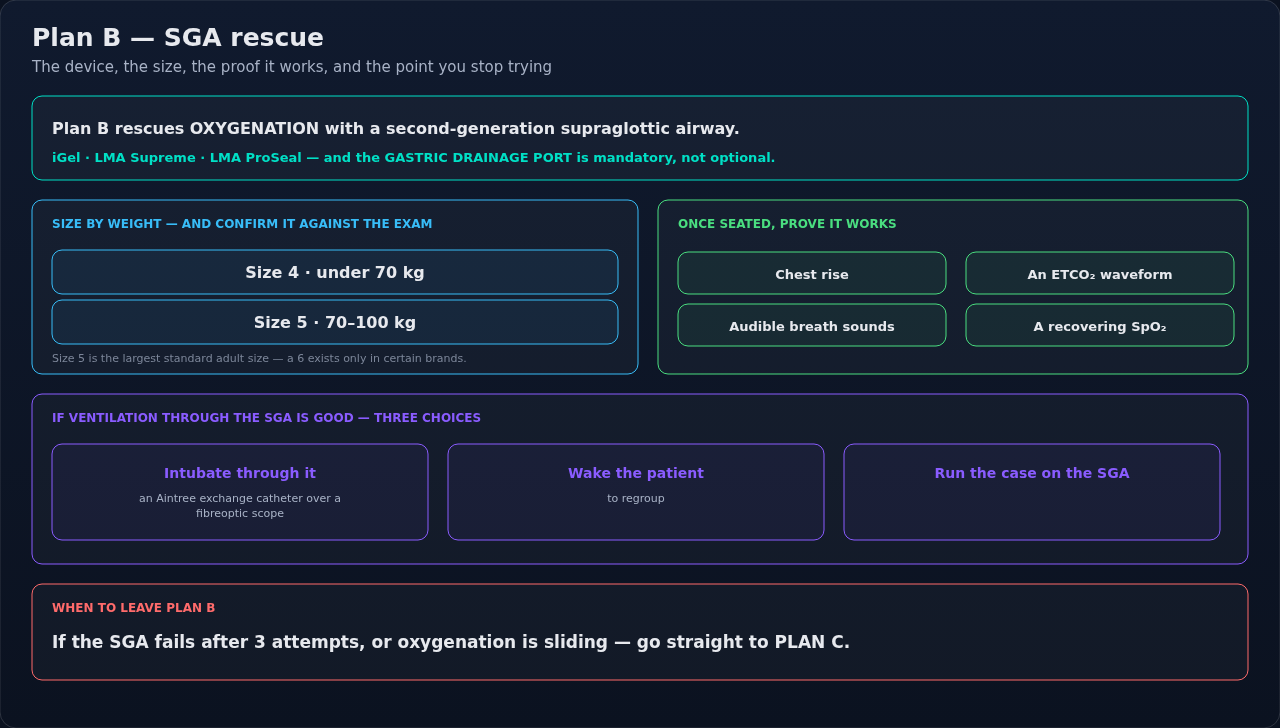
- •Failed SGA (LMA: 1 attempt is enough if no rescue ventilation)
- •Falling SpO₂
Steps
- 1Declare CVCI verbally + call for help
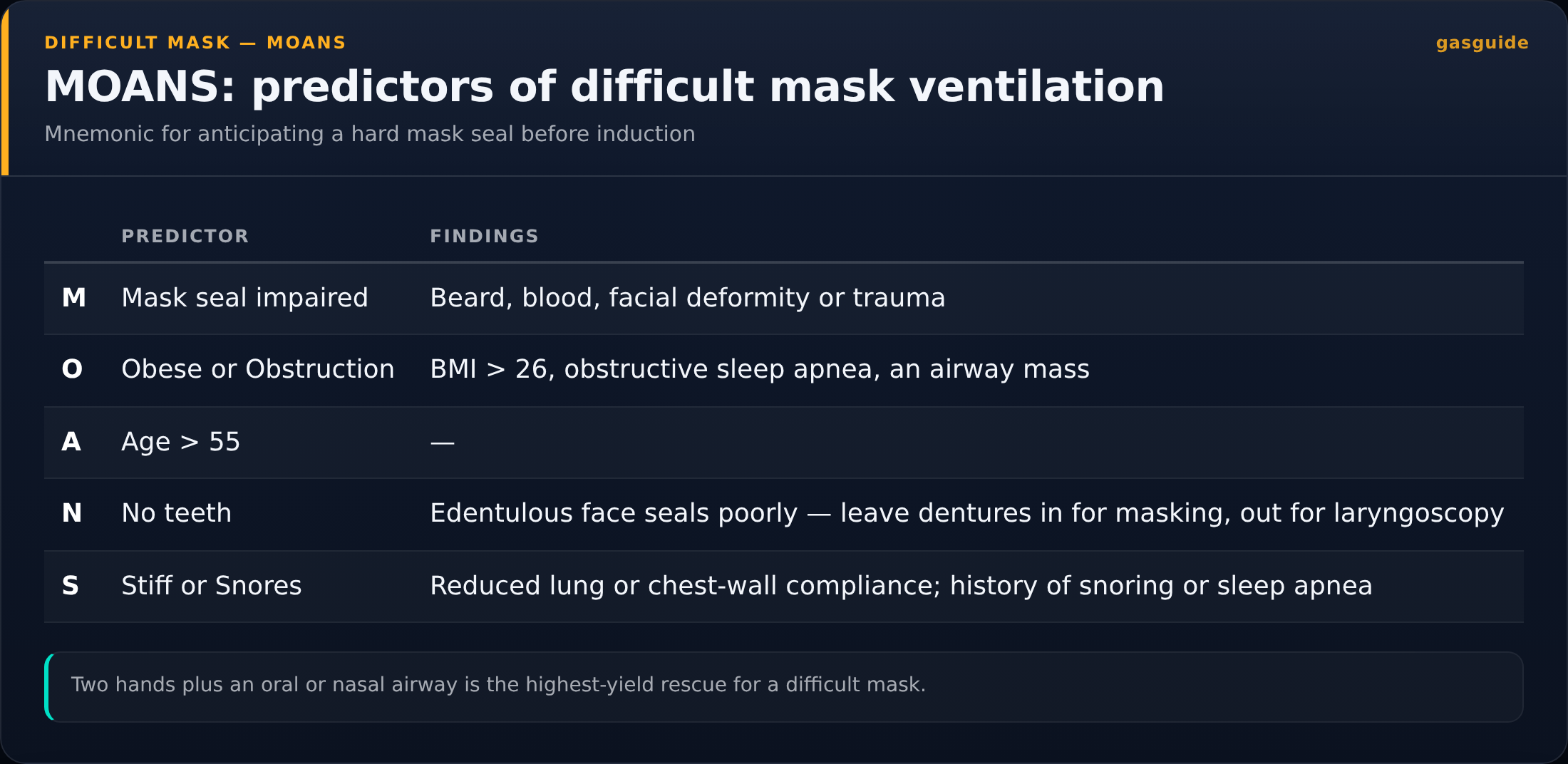
- 2100% O₂ via mask + SGA + apneic oxygenation if possible
- 3Limit attempts: ≤2 mask, ≤2 SGA, ≤2 ETTEach failure increases edema.
- 4Wake patient if elective + reversal possibleSugammadex 16 mg/kg if rocuronium. Not an option after sux past peak effect.
- 5Front-of-neck access (FONA): scalpel-bougie-tubeVertical 8 cm midline incision → palpate cricothyroid membrane → horizontal stab → bougie → 6.0 ETT.
- 6Confirm with EtCO₂. Convert to formal trach within hours.
Drugs + doses
| Drug | Dose | Note |
|---|---|---|
| Sugammadex | 16 mg/kg IV (full reversal of roc/vec) | |
| Succinylcholine | 1.5 mg/kg IV if can wake-up still desired |
Pitfalls
- !Don't keep trying laryngoscopy after 2 failed best attempts.
- !Needle cricothyroidotomy fails ~50% of the time; scalpel is preferred.
- !Awake fiberoptic is safer than asleep difficult airway — pre-plan.
Suggested reading
- DAS Guidelines 2015
- ASA Difficult Airway Practice Guidelines 2022
- Vortex Approach
Other crisis algorithms
- Malignant Hyperthermia (MH)
Hypermetabolic crisis triggered by volatile anesthetics or succinylcholine in genetically susceptible patients (RYR1, CACNA1S). Treat with dantrolene immediately.
- Perioperative Anaphylaxis
IgE-mediated (or pseudo-allergic) hemodynamic collapse from drug, latex, or transfusion exposure. Most common triggers in OR: NMBAs (rocuronium, succinylcholine), antibiotics, latex.
- Amniotic Fluid Embolism (AFE)
Rare, often fatal obstetric emergency — anaphylactoid syndrome of pregnancy. Sudden hemodynamic collapse, hypoxemia, and DIC during labor, delivery, or postpartum (within 30 min).
- LAST (Local Anesthetic Systemic Toxicity)
Cardiovascular and CNS toxicity from inadvertent IV injection or systemic absorption of local anesthetic. Bupivacaine highest cardiotoxicity. Ropivacaine + lidocaine slightly safer.
- Laryngospasm
Reflex closure of the vocal cords from light-anesthesia airway stimulation. Common in pediatrics, recent URI, and emergence. Untreated → hypoxia → bradycardia → arrest.
- High / Total Spinal
Cephalad spread of neuraxial local anesthetic causing apnea + cardiovascular collapse. Most common with epidural-to-subarachnoid migration in OB.