Indigo Carmine
Indigotindisulfonate
Blue diagnostic dye (renally excreted)
Blue dye rapidly excreted by the kidneys → visualizes ureteral efflux/urine flow. Mild α-agonist activity → transient hypertension.
Indications
- •Assess ureteral patency / identify ureteral orifices (urologic, gynecologic, pelvic surgery)
- •Locate urinary tract injury
Dosing
| Context | Adult | Pediatric |
|---|---|---|
| IV | 5 mL of 0.8% IV (~40 mg) | — |
Pharmacokinetics
Renal excretion within minutes → blue urine.
Hemodynamic effects
Transient HYPERTENSION + reflex bradycardia (mild α-agonism) — the opposite of methylene blue's transient effects.
Side effects
- !Transient hypertension
- !Minimal SpO2 interference (much less than methylene blue)
Contraindications
- ×None significant
Clinical pearls
- ★Causes transient HYPERTENSION (mild α effect) — contrast methylene blue, which transiently drops SpO2 and can cause hypotension.
- ★Frequently supply-constrained → ICG or methylene blue used as alternatives.
Other drugs in Blue Dyes
- Methylene Blue
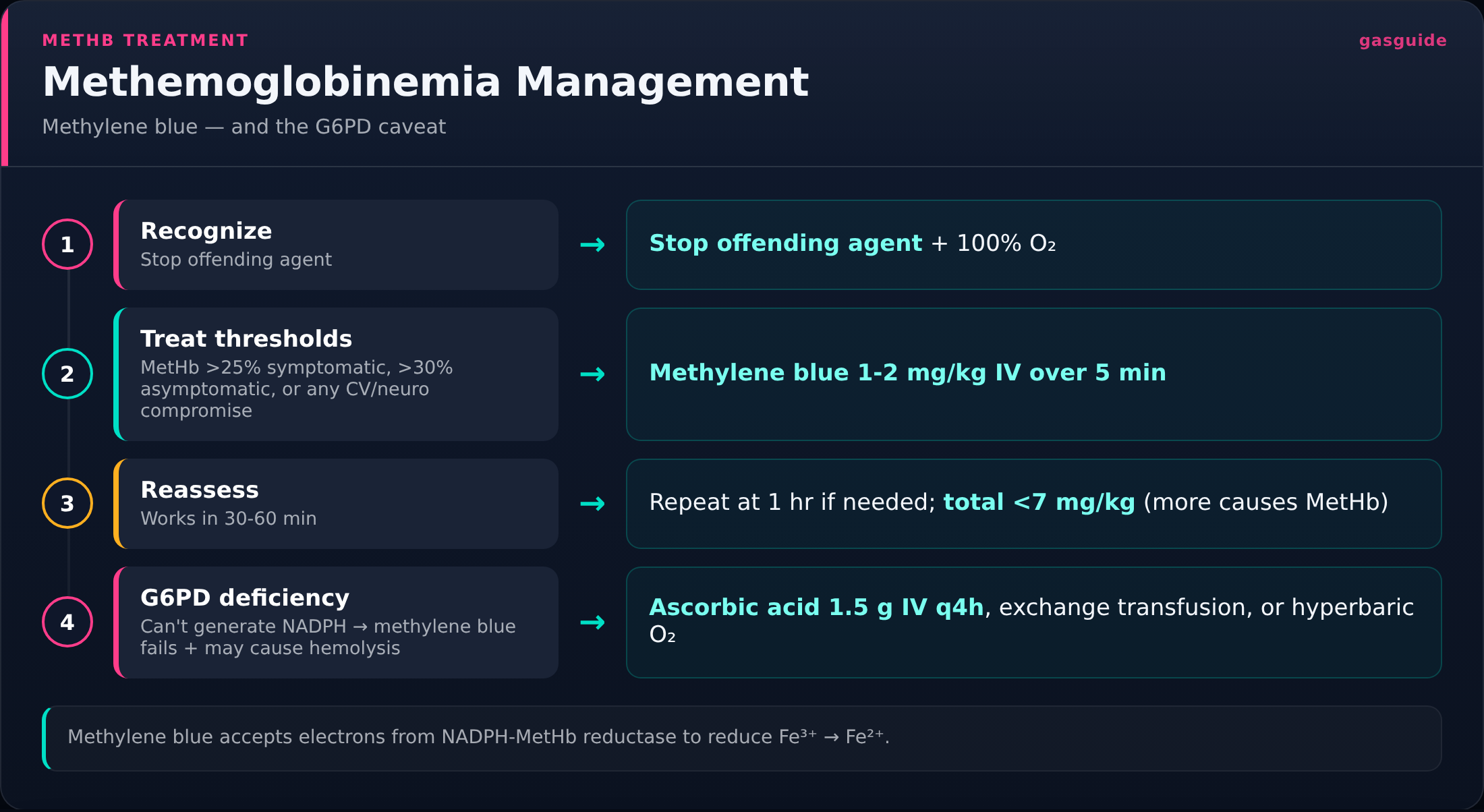
Inhibits guanylate cyclase + nitric oxide synthase → reverses NO-mediated vasodilation. At low dose, reduces methemoglobin (Fe³⁺) → hemoglobin (Fe²⁺) via NADPH-methemoglobin reductase pathway.
- Isosulfan Blue (lymphatic mapping)
Selectively absorbed into lymphatic capillaries after subdermal/peritumoral injection. Tracks to first-station lymph node → blue staining identifies the sentinel node for biopsy in breast, melanoma, and gynecologic cancers.
- Indocyanine Green (ICG)
After IV or interstitial injection, ICG binds plasma proteins (mostly albumin) and fluoresces at 805–835 nm under near-infrared (NIR) imaging. Used for real-time vascular and lymphatic visualization, hepatic function testing, and tissue perfusion assessment.
- Fluorescein
Fluoresces under blue/UV light → visualizes vasculature + perfusion + epithelial defects. Not blue, but grouped with surgical/diagnostic dyes.
Browse all classes: /reference/drugs
Suggested reading
- •Miller's Anesthesia, 9e
- •FDA package insert