Fresh Frozen Plasma (FFP)
FFP24 · PF24
Plasma-derived coagulation factor replacement
Plasma frozen within 8 h (FFP) or 24 h (FFP24/PF24) of collection. Contains all coagulation factors at near-physiologic concentrations (~1 unit/mL of each factor, plus ~400 mg fibrinogen per unit). Volume per unit ≈ 250 mL.
Indications
- •Active bleeding with documented or suspected coagulopathy (INR >1.6 or PT/PTT >1.5× normal)
- •Massive transfusion 1:1:1 with PRBC and platelets
- •Reversal of warfarin in major bleeding when 4-factor PCC unavailable
- •Plasma exchange for TTP
- •Replacement of multiple factor deficiencies (liver failure with bleeding)
- •Replacement of factor not commercially available as concentrate (factor V, factor XI in some regions)
Dosing
| Context | Adult | Pediatric |
|---|---|---|
| Coagulopathy correction | 10–15 mL/kg IV (typically 4 units for a 70 kg adult to drop INR by 30–50%) | — |
| Warfarin emergency reversal | 10–30 mL/kg IV — usually 4-factor PCC preferred when available (faster, less volume, NEJM 2013) | — |
| Massive transfusion ratio | 1 unit FFP for every 1 unit PRBC (PROPPR 1:1:1) | — |
Pharmacokinetics
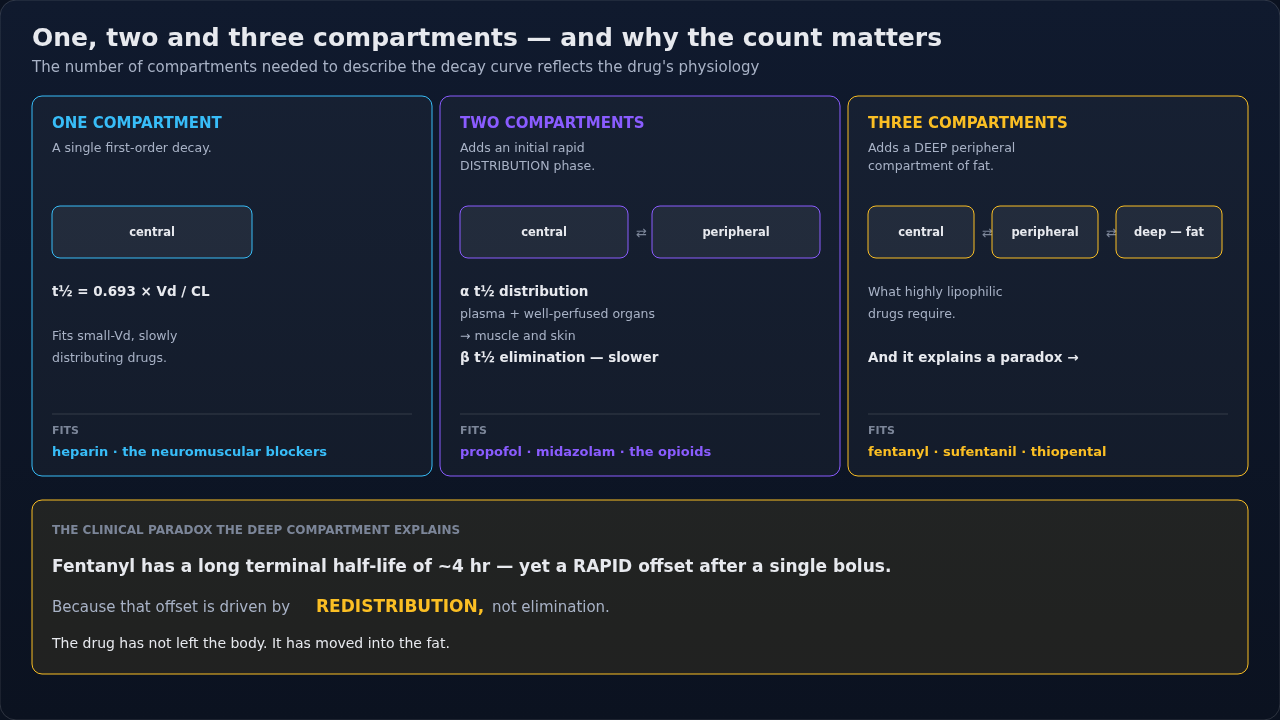
Thaw 20–30 min before use. Once thawed, store at 1–6 °C; expires 5 days. Factor levels post-transfusion: factor VII rises immediately but has 4-h half-life — re-dose if ongoing bleeding.
Hemodynamic effects
10 mL/kg = ~700 mL in a 70 kg adult — significant volume. Caution in CHF and elderly; consider PCC if volume-overload risk.
Respiratory effects
TRALI — historically from female multiparous donors; modern male-predominant plasma donor pools have reduced incidence ~80%.
Side effects
- !TRALI (the leading cause of transfusion-related mortality, plasma-heaviest)
- !TACO (volume overload — 250 mL per unit, common with multi-unit doses)
- !Allergic / urticarial reactions (more common with FFP than RBC due to plasma protein content)
- !Anaphylaxis in IgA-deficient patient with anti-IgA antibodies — give IgA-deficient FFP
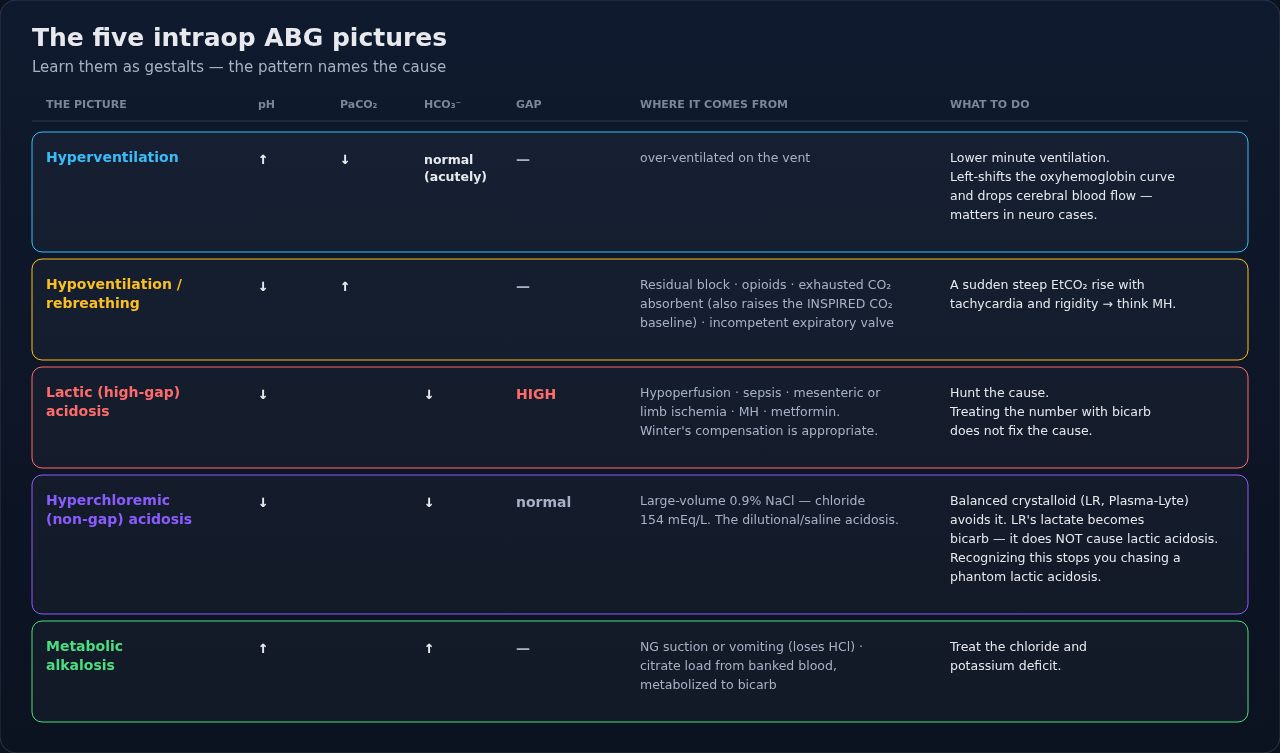
- !Citrate-induced hypocalcemia and metabolic alkalosis (rapid massive transfusion)
- !Transfusion-transmitted infection (similar window-period risk as PRBC)
Contraindications
- ×Volume expansion alone (use crystalloid/colloid)
- ×Single-factor deficiency where concentrate exists (use specific factor instead)
- ×Coagulopathy reversal where 4-factor PCC available and patient is volume-restricted
Clinical pearls
- ★WARFARIN REVERSAL — PCC > FFP: 4-factor PCC (Kcentra) reverses INR in 30 min vs 12+ h for FFP, with one-tenth the volume (NEJM 2013, Sarode et al). Use FFP only if PCC unavailable.
- ★INR CORRECTION CEILING: FFP cannot drop INR below ~1.6 because the donor pool's average INR is ~1.3 — chasing INR <1.5 with more FFP just adds volume without benefit.
- ★1:1:1 RATIO (PROPPR 2015 JAMA): in massive hemorrhage, 1:1:1 reduced 24-h hemorrhagic death vs 1:1:2. Start MTP before lab results; targeted resuscitation with TEG/ROTEM if available.
- ★WAIT FOR THAW: FFP requires 20–30 min thaw — anticipate need and thaw early. Type-specific or AB universal-donor plasma is standard for emergency release.
- ★LIVER DISEASE INR: a chronically elevated INR in cirrhosis without bleeding does NOT need correction before paracentesis or thoracentesis (multiple RCTs); reserve FFP for active bleeding or invasive procedures with bleed risk.
Other drugs in Blood Products
- Packed Red Blood Cells (PRBC)
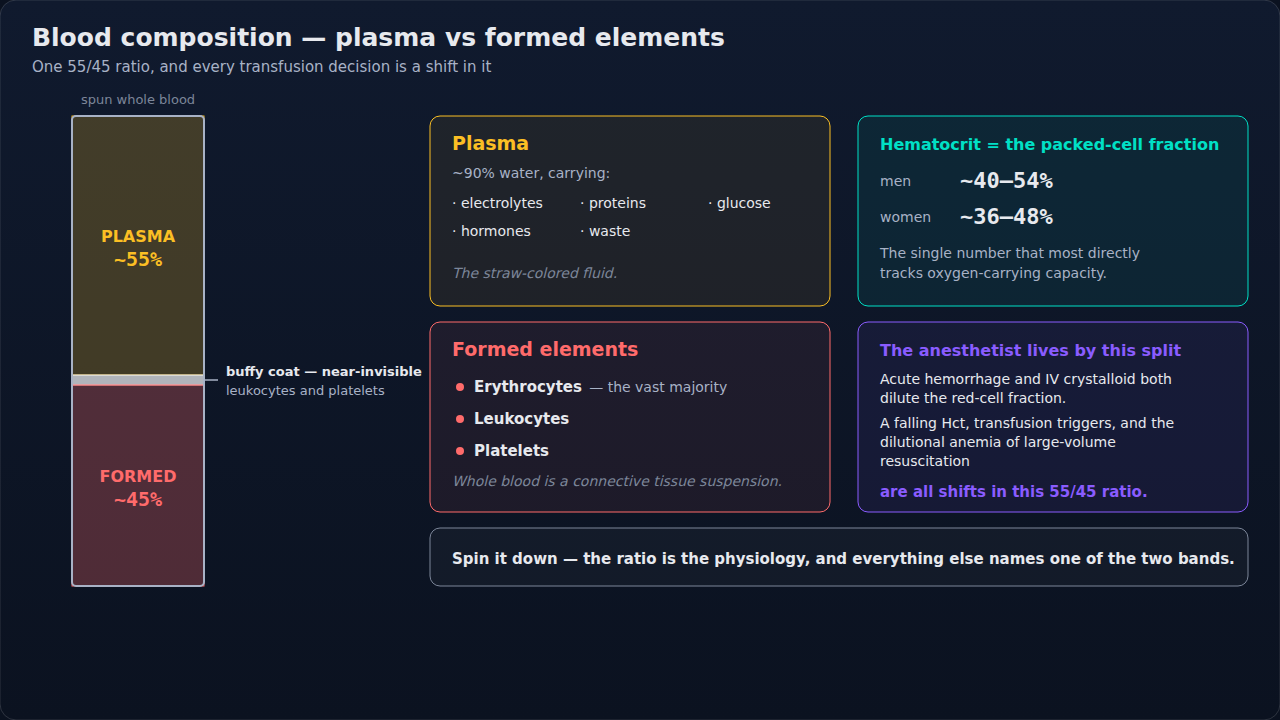
Volume of concentrated red cells (Hct 55–80%) suspended in additive solution (AS-1, AS-3, AS-5). Restores oxygen-carrying capacity and transiently expands intravascular volume. One unit ≈ 300 mL.
- Platelets (Apheresis or Pooled)
Single-donor apheresis unit (~3–4×10¹¹ platelets in ~250 mL) or pooled whole-blood-derived (5–6 random donor units; equivalent platelet count). Restores primary hemostasis.
- Cryoprecipitate
Cold-insoluble fraction of FFP. Each ~15-mL unit contains ≥150 mg fibrinogen, ~80 IU factor VIII, ~40–70% of donor vWF, factor XIII, and fibronectin. Most concentrated source of fibrinogen.
Browse all classes: /reference/drugs
Suggested reading
- •Miller's Anesthesia, 9e
- •AABB Circular of Information for the Use of Human Blood and Blood Components