Cefazolin
Ancef
First-generation cephalosporin
β-lactam — inhibits bacterial cell wall PBPs.
Indications
- •Surgical prophylaxis (most common SCIP antibiotic)
- •Skin/soft tissue infections (gram-positive)
Dosing
| Context | Adult | Pediatric |
|---|---|---|
| Surgical prophylaxis | 2 g IV (3 g if > 120 kg) | 30 mg/kg IV |
| Re-dose interval | q4 h intraop OR after blood loss > 1.5 L | — |
Pharmacokinetics
Onset 5 min. Half-life 1.5–2 h. Renal excretion.
Side effects
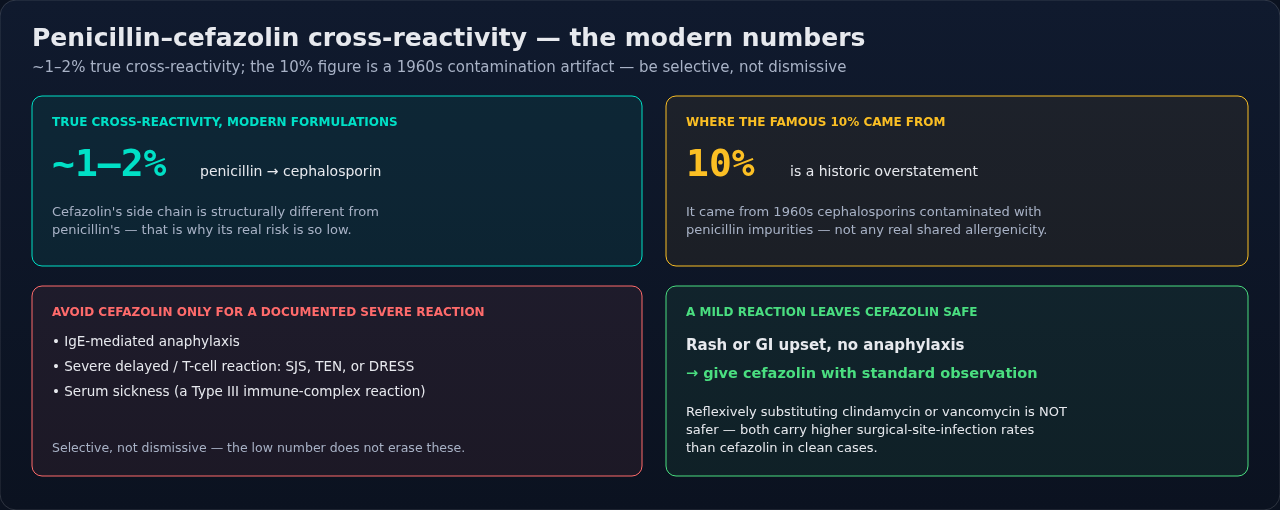
- !Allergy: ~1% true cross-reactivity with penicillin (modern data)
- !Phlebitis with peripheral push
- !C. diff (any antibiotic exposure)
Contraindications
- ×Documented anaphylaxis to cephalosporins
Clinical pearls
- ★Modern PCN allergy with non-anaphylactic history → cefazolin generally safe.
- ★Give within 60 min of incision (vancomycin within 120 min — slow infusion).
- ★Re-dose for case > 4 h or significant blood loss.
Other drugs in Antibiotics
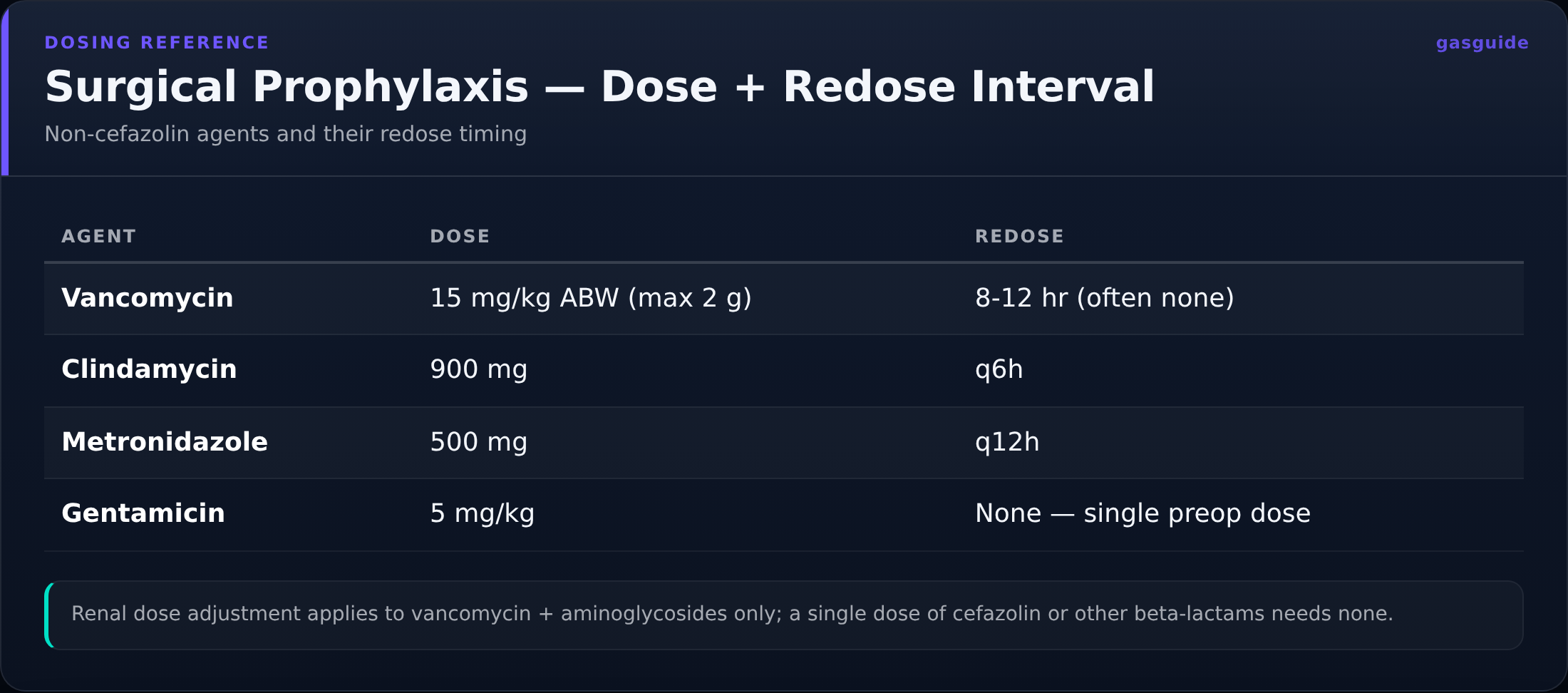
- Vancomycin
Inhibits cell wall synthesis (binds D-Ala-D-Ala). Active against MRSA + gram-positives.
- Clindamycin
Binds 50S ribosomal subunit, blocks peptide-bond formation. Bacteriostatic against most organisms; bactericidal against susceptible streptococci. Excellent activity against anaerobes and gram-positive cocci including community-acquired MRSA.
- Gentamicin
Binds 30S ribosomal subunit, causes misreading of mRNA → defective bacterial protein synthesis. Bactericidal, concentration-dependent killing. Synergy with cell-wall agents (β-lactams, vancomycin) for gram-positive endocarditis.
- Cefuroxime
β-lactam — inhibits cell-wall synthesis (PBP binding). 2nd-gen: gram-positive + expanded gram-negative.
- Cefepime
β-lactam cell-wall inhibitor. Broad gram-negative (incl. Pseudomonas) + gram-positive coverage.
- Cefotetan
β-lactam; adds anaerobic (B. fragilis) coverage → colorectal/gynecologic prophylaxis.
- Cefotaxime
β-lactam cell-wall inhibitor. Broad gram-negative + CNS penetration.
- Cefoxitin
β-lactam with anaerobic (B. fragilis) activity → colorectal/GYN prophylaxis.
Browse all classes: /reference/drugs
Suggested reading
- •Miller's Anesthesia, 9e
- •FDA package insert