Magnesium Sulfate
MgSO4
Divalent cation / NMDA antagonist / calcium-channel modulator
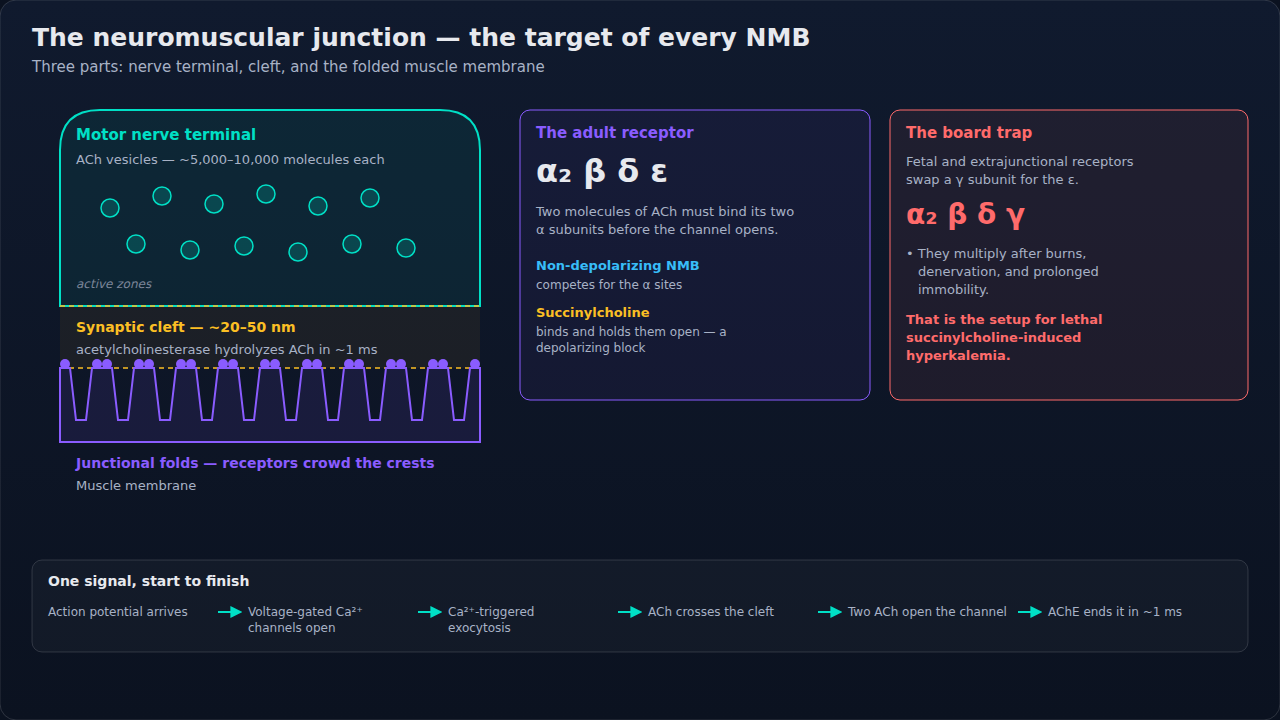
Multiple mechanisms: (1) NMDA receptor antagonism (anticonvulsant, analgesic); (2) Voltage-gated calcium channel blockade in vascular + uterine smooth muscle (vasodilation, tocolysis); (3) Decreased ACh release at neuromuscular junction (NMB potentiation); (4) Membrane stabilization (antiarrhythmic, especially torsades).
Indications
- •Eclampsia / severe preeclampsia seizure prophylaxis
- •Tocolysis for preterm labor (24–32 weeks)
- •Torsades de pointes (drug of choice)
- •Asthma exacerbation refractory to bronchodilators
- •Hypomagnesemia replacement
- •Adjunct analgesic / opioid-sparing (intraop infusion)
- •Pheochromocytoma (vasodilation + arrhythmia prophylaxis)
Dosing
| Context | Adult | Pediatric |
|---|---|---|
| Eclampsia/preeclampsia | 4 g IV bolus over 15–20 min, then 1–2 g/h infusion | — |
| Torsades de pointes | 1–2 g IV over 5–15 min; repeat | — |
| Asthma adjunct | 2 g IV over 20 min | 25–50 mg/kg over 20 min |
| Opioid-sparing analgesia (intraop) | 30–50 mg/kg IV bolus + 8–15 mg/kg/h infusion | — |
| Pediatric tocolysis (rarely) | (see eclampsia dosing) | 20–40 mg/kg load + 0.5–1 g/h |
| Hypomagnesemia repletion | 1–2 g IV over 1 h × 2–4 g total | — |
Pharmacokinetics
Onset 1 min IV. Distribution to bone (50%), ECF (~50%). T½ ~30 min initial, longer with repeated dosing. RENAL excretion (>90%) — accumulates in renal failure.
Hemodynamic effects
↓SVR (vasodilation) → ↓BP. Bradycardia. Negative inotropy at high doses.
Side effects
- !Therapeutic 4–7 mEq/L; loss of DTRs ~10 mEq/L; respiratory depression ~15 mEq/L; cardiac arrest ~25 mEq/L
- !Hypotension (bolus too fast)
- !Flushing, warmth (vasodilation)
- !POTENTIATES NEUROMUSCULAR BLOCKADE — dramatically reduces NMB requirement
- !Bradycardia + AV block at high levels
- !Pulmonary edema (rare, with prolonged tocolytic infusions)
Contraindications
- ×Heart block (without pacing)
- ×Myasthenia gravis (worsens weakness)
- ×Severe renal impairment (toxicity risk)
Reversal / antidote
CALCIUM GLUCONATE 1 g IV slowly is the antidote — competes with Mg at NMJ + cardiac membrane. Hold infusion. Supportive ventilation if respiratory depression.
Clinical pearls
- ★Preeclampsia/eclampsia: standard maintenance 1–2 g/h × 24 h post-delivery (most seizures occur postpartum). Check DTRs hourly + clinical exam.
- ★RENAL FAILURE: massively reduce dose (e.g., 1 g/h instead of 2) and monitor levels closely.
- ★INTRAOP MAGNESIUM (analgesia adjunct): 30–50 mg/kg bolus + infusion reduces opioid requirements ~30%. Watch for prolonged paralysis at end of case — reverse with sugammadex if rocuronium used.
- ★TORSADES: 2 g IV bolus stabilizes regardless of magnesium level (membrane stabilization).
- ★MgSO₄ + nondepolarizer: reduce NMB dose 25–50%, monitor TOF closely. Even at 'normal' doses, residual paralysis common.
Other drugs in Cardiac / BP
- Epinephrine
α1 (vasoconstriction), α2, β1 (inotropy + chronotropy), β2 (bronchodilation, vasodilation in skeletal muscle). Dose-dependent receptor preference: low-dose β-predominant, high-dose α-predominant.
- Norepinephrine
Strong α1 → vasoconstriction. Mild β1 → modest inotropy. Minimal β2.
- Phenylephrine
Pure α1 agonist → vasoconstriction. No β activity.
- Dexmedetomidine
α2 agonist (locus coeruleus) → sedation + analgesia + anxiolysis without significant respiratory depression.
- Vasopressin
Endogenous nonapeptide hormone. V1 receptor agonist on vascular smooth muscle (Gq → IP3 → Ca²⁺ → vasoconstriction). V2 on renal collecting ducts (Gs → cAMP → aquaporin insertion → water reabsorption). At pressor doses (0.01–0.04 U/min), V1 effects dominate.
- Esmolol
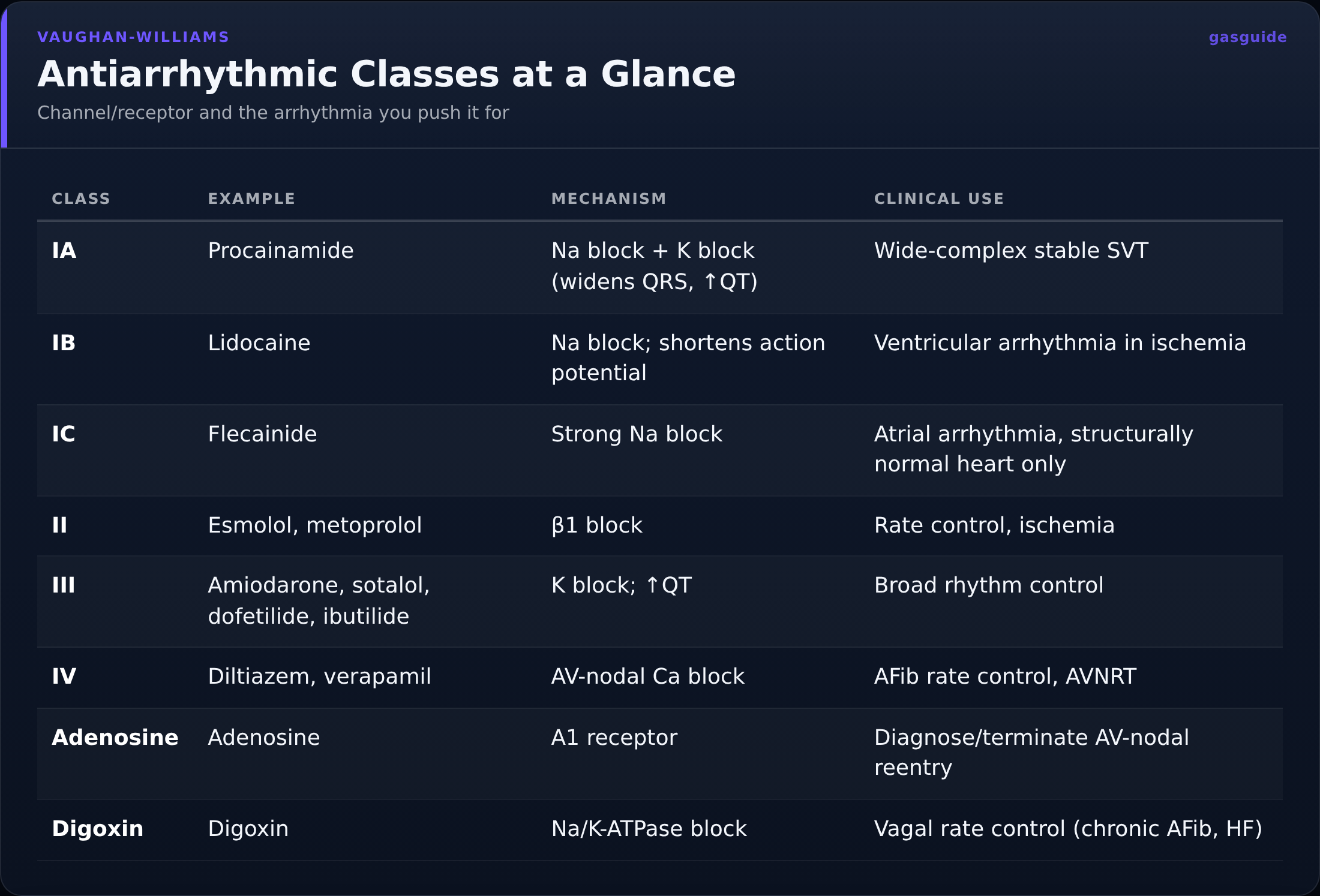
Selective β1-adrenergic receptor antagonist. Decreases HR, contractility, conduction velocity, and AV node refractoriness. Selectivity for β1 over β2 reduces (does not eliminate) bronchospasm risk vs non-selective beta-blockers.
- Amiodarone
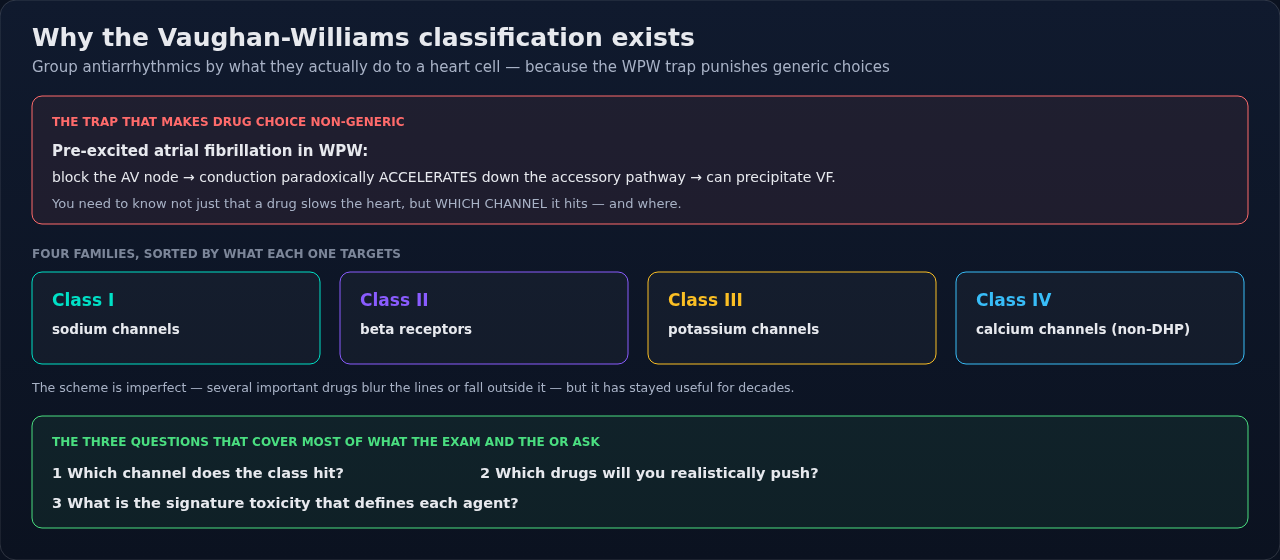
Multichannel blockade — primarily class III (K+ channel block → prolonged repolarization, increased refractory period), plus class I (Na+ block), class II (β-blocker), class IV (Ca²⁺ block) properties. Treats most supraventricular AND ventricular arrhythmias. Long elimination half-life (weeks–months) limits chronic use.
Suggested reading
- •Miller's Anesthesia, 9e
- •FDA package insert
- •AHA ACLS guidelines, 2020